

An autistic-rights perspective on schooling for autistic children
A recent social media claim suggested that autistic children should be placed in special schools and that parents should stop insisting on mainstream education. While such statements may be driven by frustration with real systemic failures, they promote a simplified and harmful view of autism, education, and rights.
This piece responds from an autistic-rights perspective, one that centers dignity, choice, and support rather than segregation.
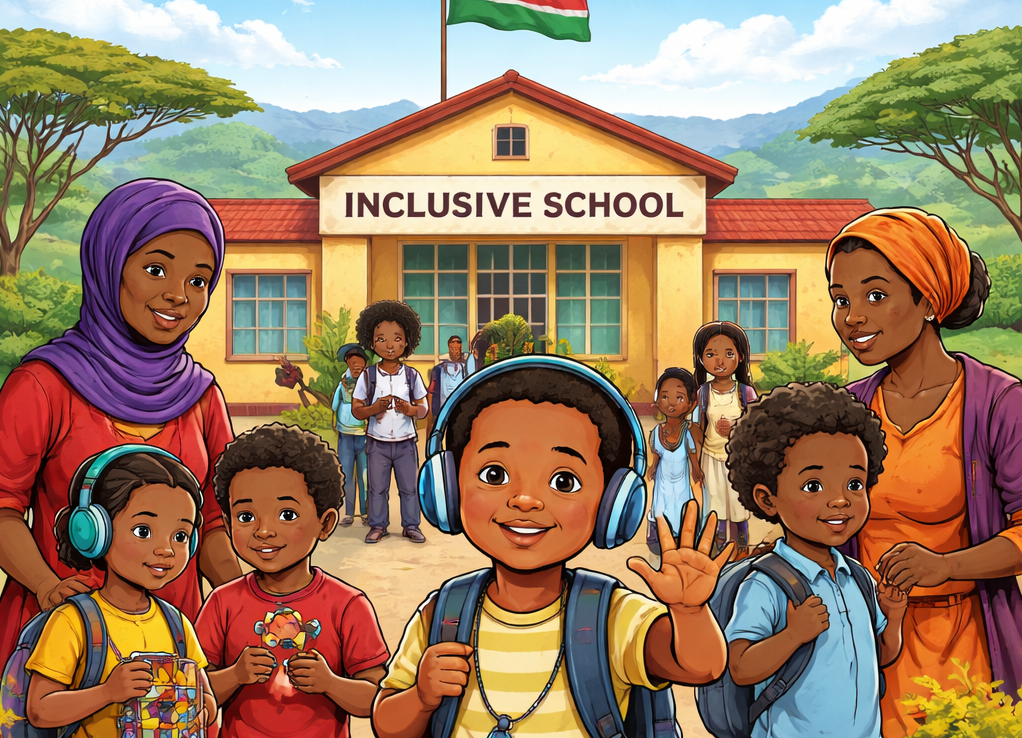
Autism is a spectrum, not a single classroom profile
Autism is not a monolith. Autistic children differ widely in how they communicate, process sensory input, learn, and relate to others. Some require high levels of support; others need minimal accommodations. Many move between these needs over time.
Because autism is a spectrum, there can be no single “correct” educational placement. Any argument that treats autistic children as a uniform group, fit only for one type of school, misunderstands autism at its core.
Inclusion is a human right, not parental stubbornness
Inclusive education is not a sentimental preference or parental denial. It is a rights-based principle grounded in international and national law.
Autistic children are entitled to learn alongside their peers with appropriate support. This principle recognizes that exclusion and segregation have historically harmed persons with disabilities, socially, economically, and psychologically.
When parents advocate for mainstream education, they are often:
- Seeking equal access, not special treatment
- Responding to the scarcity or poor quality of special schools
- Protecting their children from lifelong stigma and lowered expectations
Framing this advocacy as “insistence” dismisses both legal rights and lived realities.
Special schools are not inherently better, and often inaccessible
Special schools can be valuable for some autistic children, particularly where intensive or specialized support is needed. However, they are not inherently superior, nor are they universally available.
In many African contexts, including Kenya:
- Special schools are limited in number and uneven in quality
- Many are under-resourced and overstretched
- Costs and distance place them out of reach for most families
For many parents, the choice is not between “mainstream” and “special,” but between mainstream education with effort and no education at all.
When inclusion fails, the system, not the child, is failing
Critics of inclusive education often cite real harms:
- Overcrowded classrooms
- Teachers without training in neurodiversity
- Bullying and social exclusion
- Sensory overload
These harms are real. But they are systemic failures, not evidence that autistic children do not belong in mainstream schools.
An autistic-rights framework is clear: the environment must adapt to the learner, not the other way around.
Placement should follow support needs, not ideology
From a rights-based perspective, the key question is never:
“Should autistic children be in mainstream or special schools?”
The real questions are:
- What does this child need to learn and thrive?
- What supports are required right now?
- Which environment can realistically provide them at this stage?
For some children, a special school may be the best option.
For others, it will be a mainstream school with accommodations.
For many, the answer will change over time.
Choice, flexibility, and dignity must guide decisions, not blanket rules.
Why segregation-first narratives are dangerous
Statements that default autistic children to special schools:
- Reinforce stigma that autistic learners are “too difficult”
- Normalize separation as the solution
- Shift responsibility away from education systems
- Silence autistic adults who advocate for inclusion
Most concerningly, they lower expectations, and low expectations limit lives.
A better conversation
Neuro Inclusion Africa advocates for an education system where:
- Inclusion is properly resourced
- Special schools exist as options, not defaults
- Teachers are trained in neurodiversity
- Parents and autistic people are listened to, not blamed
Autistic children are not problems to be managed. They are learners, citizens, and rights-holders.
The question is not where they should be placed, but whether we are willing to build systems that allow them to belong.
Neuro Inclusion Africa works to advance dignity, access, and opportunity for neurodivergent people across Africa through advocacy, education, and practical support.